"O I have killed my hawk so good, Mother, Mother, O I have killed my hawk so good, And I had no more but he, O."
~ Anonymous, Edward
For my final poetry blog, I thought I would write something consisting of only questions.
Is the hawk a metaphor?
Does he get some kind of sick masochism out of killing his hawk "so good?"
If he "had no more" but his hawk, why would he kill it?
Wouldn't he have learned his lesson after he killed the hawk? Did he have to go kill the horse?
Why did he kill his father?
Did he really kill his father, or is that a metaphor?
Why does he kill so many things/people?
Is he really sailing away to do penance, or is he running from all the murder he should be charged with?
How would sailing away be penance?
Why would he just let his house fall apart? Does he think he won't ever come back?
What kind of person lets his wife/children starve and thinks "Hmmm, they can just beg on the streets until they rot away into a desperate, bitter nothing and I have the pleasure of knowing it was all my fault!" ?
Why does he hate his mom?
Hasn't his mom been helping him with his problems all this time?
Why would he suddenly turn on her?
But why did he turn on everyone else in his family?
Why didn't his mom slap him after he talked to her like that? (If I cursed my mom to hell, I might get one to the face)
Why does he think his mom had cursed him through her counsels?
Could she not just unintentionally give really bad advice?
WHY IS EDWARD SUCH A JERK??
Showing posts with label poetry. Show all posts
Showing posts with label poetry. Show all posts
Thursday, October 6, 2011

This is Just Sad - Poetry Blog 4 (Elegy for My Father, Who Is Not Dead)
"I see myself on deck, convinced his ship's gone down, while he's convinced I'll see him standing on the dock and waving, shouting, Welcome back."
~ Andrew Hudgins, Elegy for My Father, Who is Not Dead
I was very sad after reading this poem. I just wanted to give Andrew a hug! His father has already resigned to death, but he is really upset over this. I've never lost a parent, so I can't really imagine how painful it is, but I think if you have a lot of time to think about what's coming, then it would be very difficult to deal with before the death as well as during. Seeing someone be ready for death can be peaceful and inspiring - he/she has the courage to face the end that you don't have yet. But it is probably also concerning, especially if it's not because the person is fearlessly venturing into something that no one can ever understand, but because that person has simply given up on life. It makes me think of a nursing home full of sad, lonely old people. I feel like Andrew is a little desperate to save his father - he's trying to hold on to those last moments of life they can share, but his dad is ready to go. :( . I don't know, I'm just thinking aloud.
~ Andrew Hudgins, Elegy for My Father, Who is Not Dead
I was very sad after reading this poem. I just wanted to give Andrew a hug! His father has already resigned to death, but he is really upset over this. I've never lost a parent, so I can't really imagine how painful it is, but I think if you have a lot of time to think about what's coming, then it would be very difficult to deal with before the death as well as during. Seeing someone be ready for death can be peaceful and inspiring - he/she has the courage to face the end that you don't have yet. But it is probably also concerning, especially if it's not because the person is fearlessly venturing into something that no one can ever understand, but because that person has simply given up on life. It makes me think of a nursing home full of sad, lonely old people. I feel like Andrew is a little desperate to save his father - he's trying to hold on to those last moments of life they can share, but his dad is ready to go. :( . I don't know, I'm just thinking aloud.
A Lovely Change of Pace / Paradox - Poetry Blog 3 (Lonely Hearts)
"Who knows where it may lead once we've begun? Can someone make my simple wish come true? Do you live in North London? Is it you?"
~ Wendy Cope, Lonely Hearts
The way I see it, this poem is paradoxical in two different ways.
1) The Conditions and the Situation: Each person who is writing in this "Personals" column has a different story, a different need, a different sexual orientation. However, all of these people want the same thing - love. Although these people come from diverse places and have different backgrounds, all of their hearts yearn for the same thing.
2) The Description and the Situation: The title "Lonely Hearts" suggests that each person writing in this column is alone, and not happy about it. All of these people may be alone in their life, but they are linked by what they seek. Everybody wants companionship; this brings about a tone of universality although the people are all considered lonely - there is someone out there who is like them (and hopefully someone who is for them).
 The "Situation" aspect of both paradoxes is the same - love. This is made apparent through the uniformity of the last lines of each stanza - "Do you live in North London? Is it you?" or "Can someone make my simple wish come true?" Also, the last stanza, "Who knows where it may lead once we've begun? Can someone make my simple wish come true? Do you live in North London? Is it you?" is what links all of these people together and creates a common wish for which we all strive in the end.
~ Wendy Cope, Lonely Hearts
The way I see it, this poem is paradoxical in two different ways.
1) The Conditions and the Situation: Each person who is writing in this "Personals" column has a different story, a different need, a different sexual orientation. However, all of these people want the same thing - love. Although these people come from diverse places and have different backgrounds, all of their hearts yearn for the same thing.
2) The Description and the Situation: The title "Lonely Hearts" suggests that each person writing in this column is alone, and not happy about it. All of these people may be alone in their life, but they are linked by what they seek. Everybody wants companionship; this brings about a tone of universality although the people are all considered lonely - there is someone out there who is like them (and hopefully someone who is for them).
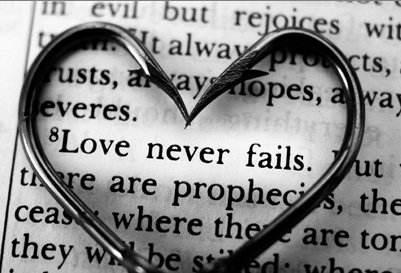 The "Situation" aspect of both paradoxes is the same - love. This is made apparent through the uniformity of the last lines of each stanza - "Do you live in North London? Is it you?" or "Can someone make my simple wish come true?" Also, the last stanza, "Who knows where it may lead once we've begun? Can someone make my simple wish come true? Do you live in North London? Is it you?" is what links all of these people together and creates a common wish for which we all strive in the end.
And More Death / Metaphors - Poetry Blog 2 (Death, Be Not Proud)
"Death, be not proud, though some have called thee Mighty and dreadful, for thou art not so; For those whom thou think'st thou dost overthrow Die not, poor death, nor yet canst thou kill me."
~ John Donne, Death, Be Not Proud
 This poem is filled with metaphors. The most significant metaphor relates to death and religion. Throughout the poem, there is an image of Jesus' crucifixion. It talks about how death cannot conquer a human, even if he does die - "die not, poor death, nor yet canst thou kill me." This is metaphorical for how Jesus died on the cross to save all of us and help us achieve salvation. Also, the poem says "one short sleep passed, we wake eternally, and death shall be no more; death, thou shalt die." This sounds pretty familiar - the message is in the Gospel. Jesus died, just as we all will die (the short sleep passed), but then, he gave us everlasting life (we wake eternally), because he conquered death (death, thou shalt die). These metaphors teach to not be afraid of death because we will all be saved and live forever in the end.
~ John Donne, Death, Be Not Proud

Death Sums Up This Week / Couplets - Poetry Blog 1 (Week 5 and then we are done. That Time of Year)
"This thou perceivest, which makes thy love more strong, To love that well which thou must leave ere long."
~ William Shakespeare, That Time of Year
First off, I would like to point out something that will probably be discussed (or at least briefly mentioned) in class - this is a sonnet. That's 14 lines, people.
Secondly, I would like to say that I am sensing a pattern in Shakespearean sonnets. In William's last poem we analyzed, My Mistress' Eyes, he presented 12 lines of poetry that seemingly had one meaning, but then the last couplet completely changed the message; it turned the poem from critical and demeaning to realistic yet sweet. This poem is no different; the first three quatrains each have their own metaphor for death - which seems to be a recurring theme in almost every poem - the nature (birds and trees) to twilight and dusk to the "ashes of his youth," or fire. But what seems to be a reflection on imminent death takes on not a different meaning, but a more complex one. The last two lines say "this thou perceivest, which makes thy love more strong, to love that well which thou must leave ere long"; in English, that means that because the woman he loves knows he is old and may die soon, her love grows stronger for him and she cherishes it more because they have a limited amount of time until he will die. Or, I guess he may not even be that old, but the couple just recognizes how short life is. So, at first the poem meant that death was near, but now it means that we should love others to the fullest before we die.
~ William Shakespeare, That Time of Year
First off, I would like to point out something that will probably be discussed (or at least briefly mentioned) in class - this is a sonnet. That's 14 lines, people.
Secondly, I would like to say that I am sensing a pattern in Shakespearean sonnets. In William's last poem we analyzed, My Mistress' Eyes, he presented 12 lines of poetry that seemingly had one meaning, but then the last couplet completely changed the message; it turned the poem from critical and demeaning to realistic yet sweet. This poem is no different; the first three quatrains each have their own metaphor for death - which seems to be a recurring theme in almost every poem - the nature (birds and trees) to twilight and dusk to the "ashes of his youth," or fire. But what seems to be a reflection on imminent death takes on not a different meaning, but a more complex one. The last two lines say "this thou perceivest, which makes thy love more strong, to love that well which thou must leave ere long"; in English, that means that because the woman he loves knows he is old and may die soon, her love grows stronger for him and she cherishes it more because they have a limited amount of time until he will die. Or, I guess he may not even be that old, but the couple just recognizes how short life is. So, at first the poem meant that death was near, but now it means that we should love others to the fullest before we die.
Thursday, September 29, 2011
Frog Prince - Poetry Blog 5 (Hazel Tells LaVerne)
"kiss me just kiss me once on the nose well i screams ya little green pervert an i hitsm with my mop an has ta flush the toilet down three times me a princess"
 The last poem for this week is Hazel Tells LaVerne by Katharyn Howd Machan. This is probably one of the most unique poems I have read yet. First of all, the lack of punctuation yet easily understandable material was very refreshing. I got a clear image of what was happening, and it was actually a bit entertaining to imagine. I wonder, though - does the author actually write like that or did she write in a dialect to give personality to the character? Either way, it worked. I also liked that it was a story I had heard several times before, but with a twist - she gets rid of him instead of taking him up on his offer. I can tell that she is a very realistic person by the way she is so shocked at the thought of being a princess; she even repeats it. Overall, I enjoyed this poem. It was a nice change compared to the rest of the stuff we have read in the last couple of weeks.

Approaching Death / Symbolism - Poetry Blog 4 (Crossing the Bar)
"Sunset and evening star, And one clear call for me! And may there be no moaning of the bar When I put out to sea."
The poem Crossing the Bar by Alfred, Lord Tennyson uses a lot of symbolism throughout. During the poem, he is talking about what he wants to happen at his imminent death. He doesn't want anyone to mourn for him; his death should be quiet and peaceful. He says this several times when he states "And may there be no moaning of the bar When I put out to sea," and "And may there be no sadness of farewell When I embark." The sea is used as a symbol for death, and as he crosses the sandbar into the sea, he is dying. The poem brings about the idea of the "circle of life" as a never-ending cycle when Tennyson says "But such a tide moving seems asleep, Too full for sound and foam, When that which drew from out the boundless deep Turns again home." God is also represented in the poem as the Pilot when Tennyson expresses his desire to see God when he dies.
Time Flies / Oxymoron - Poetry Blog 3 (To His Coy Mistress)
"Thus, though we cannot make our sun Stand still, yet we will make him run."
In Andrew Marvell's poem To His Coy Mistress, in the title, immediately we see an oxymoron. "Coy mistress" is strange because someone who is coy is holding back, but "mistress" is associated with giving in to carnal desires, especially when there is a separate marriage involved. In this case, the mistress and man just haven't done the deed yet. While the speaker never directly says that he wants sex, the oxymoron reveals what he is asking of his mistress. He is telling her that if they had an infinite amount of time, he would have no problem waiting, but time is running out - carpe diem! What better time than the present? She is trying to preserve her honor, but he is doing everything he can to destroy it. The diction in this poem creates a sense of urgency that supports the speaker's opinions on time.
In Andrew Marvell's poem To His Coy Mistress, in the title, immediately we see an oxymoron. "Coy mistress" is strange because someone who is coy is holding back, but "mistress" is associated with giving in to carnal desires, especially when there is a separate marriage involved. In this case, the mistress and man just haven't done the deed yet. While the speaker never directly says that he wants sex, the oxymoron reveals what he is asking of his mistress. He is telling her that if they had an infinite amount of time, he would have no problem waiting, but time is running out - carpe diem! What better time than the present? She is trying to preserve her honor, but he is doing everything he can to destroy it. The diction in this poem creates a sense of urgency that supports the speaker's opinions on time.
The Great Escape / Tone - Poetry Blog 2 (Getting Out)
"Every night another refusal, the silent work of tightening the heart. Exhausted, we gave up."
In Cleopatra Mathis' poem Getting Out, she describes two people imprisoned in a relationship. Eventually, they divorce and go their separate ways although it is difficult to split. The tone throughout the poem can be described as exasperated. Whenever they were married, they were called "inmates." The relationship definitely wore on both of the people as it progressed. Instead of benefiting the couple, it brought resentment that would ultimately lead to the demise of the marriage. The tone could also be considered poignant. The two had an emotionally destructive relationship, but they had also shared a lot of experiences together that could never be replaced by anyone or anything else, so there would be mixed feelings about the divorce.
In Cleopatra Mathis' poem Getting Out, she describes two people imprisoned in a relationship. Eventually, they divorce and go their separate ways although it is difficult to split. The tone throughout the poem can be described as exasperated. Whenever they were married, they were called "inmates." The relationship definitely wore on both of the people as it progressed. Instead of benefiting the couple, it brought resentment that would ultimately lead to the demise of the marriage. The tone could also be considered poignant. The two had an emotionally destructive relationship, but they had also shared a lot of experiences together that could never be replaced by anyone or anything else, so there would be mixed feelings about the divorce.
Realistically Romantic - Poetry Blog 1. Week Four. (My Mistress' Eyes)
"My mistress' eyes are nothing like the sun; Coral is far more red than her lips' red."
 First up, we have William Shakespeare's My Mistress' Eyes. William is known for his romantic writings (Romeo and Juliet, the most classic love story of all time), but this poem could appear to be quite... normal. He's saying throughout the whole poem that his lover's physical attributes aren't comparable to the beauty of nature. Many other poets describe their significant other as divine - but William takes a more realistic approach to his poem. He defies the quintessential romantic similes often used in poetry by saying, "Hey, my girl doesn't look like a sunset, but I would choose her over any other woman out there." By saying this, it gives the poem a very genuine tone - he isn't just making up crap or blatantly over-exaggerating a woman's looks. He is truly acknowledging her beauty and what he loves about her; he knows how much he loves her. You've done it again, William - you've turned the everyday into something extraordinary.

Wednesday, September 21, 2011
Walking the Line - Poetry Blog 5 (Mr. Z)
The last poem I read provoked a lot of thought for me. Mr. Z is about a Jewish man who is defying racial stereotypes. However, he may be taking this idea too far. One could definitely argue that he is losing touch with his heritage. The poem reveals that the line between breaking through the glass ceiling and losing oneself is shockingly thin. Yes, we should try to integrate other cultures into our own and be tolerant of everyone. Even considering this, it's important for other races to embrace their heritage. They shouldn't pretend to be white or any other majority race just to fit in - that would be denying their own identities. Even at the end of the poem, the critics who wrote about his death explicitly categorized him as a Jew despite his efforts to be seen as more than that. While people shouldn't stereotype or focus only on color, different races should really accept and take pride in their race while also achieving something more.


Blissful Ignorance - Poetry Blog Number 4 (APO 96225)
People are stupid. They think they want to know everything, but then they just block out anything that is slightly unpleasant. That's exactly what is happening in APO 96225 by Larry Rottmann. The son goes off to war and, no doubt, experiences things that the average American wants nothing to do with. He tries to protect his mother, so he hides all the horrible things that happen out there with remarks about the weather. The mother thinks she wants to know what he isn't telling her, but she doesn't know how bad it is. When he actually does tell her, his father writes back to him: "Please don't write such depressing letters. You're upsetting your mother." Okay, mom, don't ask for what you can't handle. Why would people want to be ignorant? Isn't it much better to know things so you can be prepared to face them sometime in the future? I would much rather know the truth than be taken by a surprise attack later. Ignorance is just avoiding a problem, and it will catch up with you later - no matter how unpleasant.
To the Linen Closet / Overstatement - Poetry Blog 3 (Sorting Laundry)
Next, I read Sorting Laundry by Elisavietta Ritchie.
 I really liked this poem! It was cute. I loved how the different pieces of fabric and clothing represented different parts of the speaker and her man's life together. The overstatement in this poem is the line "a mountain of unsorted wash could not fill the empty side of the bed." Before this line, the speaker was talking about how if her significant other left her, she would be devastated and left empty inside. The overstatement itself is saying how much she really needs the other person and how no one else would ever replace what they had together. It gives the reader a mental image of the largest pile of clothing he/she could imagine never being enough for the reader. This just re-emphasizes the fact that their memories together amount to more than anybody else's could.
 I really liked this poem! It was cute. I loved how the different pieces of fabric and clothing represented different parts of the speaker and her man's life together. The overstatement in this poem is the line "a mountain of unsorted wash could not fill the empty side of the bed." Before this line, the speaker was talking about how if her significant other left her, she would be devastated and left empty inside. The overstatement itself is saying how much she really needs the other person and how no one else would ever replace what they had together. It gives the reader a mental image of the largest pile of clothing he/she could imagine never being enough for the reader. This just re-emphasizes the fact that their memories together amount to more than anybody else's could.
Life Is Plastic, It's Fantastic! / Irony - Poetry Blog 2 (Barbie Doll)

Caesarean-section Barbie!
Next, I am a bit conflicted during this poem. I have moments when I think I know exactly what is happening, but then something comes up and I'm ridiculously confused. I get that it's about a girl who isn't perfect and who traditionally wouldn't be considered beautiful. The poem emphasizes the vanity of humanity (I'm sorry, I had to). The last stanza is confusing to me though. I'm not exactly sure what just happened - did she get plastic surgery, or is that metaphorical? Did the plastic surgery go awry and contribute to her death? Was she just made over by the mortician?
As I promised in the title, I will now talk about the irony. While I don't know all the details of her death, apparently, she is really attractive when she is dead. "Doesn't she look pretty? everyone said" contrasts to their opinions of her when she was alive and ugly. "Consummation at last" reveals the irony that she finally got the praise that she wanted, but she was dead when it came about. Also, "To every woman a happy ending" is dark irony because we don't associate death with a "happy ending."
Fear the Unorthodox / Paradox - Poetry Blog 1 (Much Madness is Divinest Sense. Semaine Trois)
To start off week 3, I am once again going to look at a Dickenson poem. Much Madness is Divinest Sense is pretty typical - a sea of unnecessary capitalization and hyphens. Let's start:
Emily pulls a fast one on us and states society's consensus; however, she completely disagrees with her peers. Instead of assenting with this common belief, she thinks that "Much Madness is divinest Sense" - that insanity is sensible. When we think about insanity, we usually think of chaos and irrational actions or thoughts. When we think of sensibility, we think of organized thought and rational decisions. Because of the contrast between these two words, a paradox is created. Insanity is sensible because it's human - we overreact to situations and people, and we make mistakes and screw ourselves over sometimes. If someone is completely calm at all times, that may be a warning sign that he or she is kind of crazy. It's the quiet ones you have to watch out for, right?
Emily pulls a fast one on us and states society's consensus; however, she completely disagrees with her peers. Instead of assenting with this common belief, she thinks that "Much Madness is divinest Sense" - that insanity is sensible. When we think about insanity, we usually think of chaos and irrational actions or thoughts. When we think of sensibility, we think of organized thought and rational decisions. Because of the contrast between these two words, a paradox is created. Insanity is sensible because it's human - we overreact to situations and people, and we make mistakes and screw ourselves over sometimes. If someone is completely calm at all times, that may be a warning sign that he or she is kind of crazy. It's the quiet ones you have to watch out for, right?
Wednesday, September 14, 2011
A Rant. - Poetry Blog 5 (February)
This is probably the single worst poem I have read in.... forever. It's February by Margaret Atwood.
First of all, there are probably fourteen different things happening at the same time. She talks about winter, then her psycho cat, then war between the neighborhood cats, then castrating the cats, then love, then hockey, then environmental problems, then depression, then french fries, then certain unpleasant regions of her psycho cat, then outlooks on life, then spring. At the end of the poem, the reader is left with a few less brain cells than when he/she started. It just doesn't make sense - is she just telling us about her life, or is there some twisted symbolism in this? I don't like it. Here is a list of things I would rather be doing than reading this poem.
1) Enjoying a nice piece of fiction that is easy to understand.
2) Watching Accepted for the 200000000948th time.
3) Being at work.
4) Buck Buck - ing.
5) Doing my Government homework.
6) Writing yet another college scholarship essay.
7) Walking into incoming traffic.
The one thing I may get in this poem is that the cat is like winter. Both represent pessimism. The cat itself represents immorality and physicality (physical pleasure/triumph that lacks any emotional/intellectual/mental depth) What I don't understand is that if the cat is that depressing, why don't you just get rid of it? It's not like it's a baby.
Margaret Atwood, I have no idea what your point is, and I do not look forward to reading your poems in the near future.
First of all, there are probably fourteen different things happening at the same time. She talks about winter, then her psycho cat, then war between the neighborhood cats, then castrating the cats, then love, then hockey, then environmental problems, then depression, then french fries, then certain unpleasant regions of her psycho cat, then outlooks on life, then spring. At the end of the poem, the reader is left with a few less brain cells than when he/she started. It just doesn't make sense - is she just telling us about her life, or is there some twisted symbolism in this? I don't like it. Here is a list of things I would rather be doing than reading this poem.
1) Enjoying a nice piece of fiction that is easy to understand.
2) Watching Accepted for the 200000000948th time.
3) Being at work.
4) Buck Buck - ing.
5) Doing my Government homework.
6) Writing yet another college scholarship essay.
7) Walking into incoming traffic.
The one thing I may get in this poem is that the cat is like winter. Both represent pessimism. The cat itself represents immorality and physicality (physical pleasure/triumph that lacks any emotional/intellectual/mental depth) What I don't understand is that if the cat is that depressing, why don't you just get rid of it? It's not like it's a baby.
Margaret Atwood, I have no idea what your point is, and I do not look forward to reading your poems in the near future.
This Lady is Sick - Poetry Blog 4 (The Joy of Cooking)
When you first read The Joy of Cooking by Elaine Magarrel, you may cringe in response to the grotesque methods of the narrator. However, Magarrel's "[scrubbing] and [skinning]" of her sister's tongue is not literal. The tongue is her sister's words, her ideas and thoughts. When the narrator is preparing her "tongue" in a dish, she is actually degrading her thoughts, dreams, opinions, etc.; she is destroying them. Like the tongue, her brother's heart represents something intangible. His heart is her brother's ability to give love. However, when she describes it as "firm" and "dry," she means that he is a cold person. Her brother puts up a tough front, or he just is a mean person who seems to lack emotion. Either way, the narrator is insulting her sister's ideas and her brother's personality.
Under the Influence... of Life? / Irony - Poetry Blog 3 (I Taste a Liquor Never Brewed)
Emily Dickenson wrote the poem I taste a liquor never brewed. Throughout the whole poem, she uses alcoholic words to describe a somewhat different experience. It reminded me of the expression "high on life." She uses words like "inebriate," "debauchee," "drams," and "vats" - all which relate to alcohol. The only part of this I'm not quite sure about, however, is what she is getting drunk off of. It seems like there's no logical reason, but that may be part of the poem; she is just feeling good. In addition, her reference to religious figures is ironic because drinking in excess is usually considered very immoral (especially when she describes herself as a debauchee) in most religions. The "Seraphs" and "Saints" take interest in her drunken actions when traditionally, they would have been disappointed or ashamed of her.
Twinkle, Twinkle, Little Star / Mood - Poetry Blog 1 (For Week 2!) (Bright Star)
The poem Bright Star, by John Keats, describes a man who looks into the sky and sees a star; he tells how he would act differently if he behaved as the star. The way I see this poem, it can be divided into two parts.
The first part is his description of the star's action. It watches the world and sees the beauty of it - particularly, nature. The star is compared to an insomniac who watches the "moving waters" and "snow upon the mountains and the moors." What the star is observing is later contrasted with what the man would.
The second part describes what the man would do if he were as loyal and constant as the star. He would watch, instead of the world, a woman. He says that if he were to do one thing for the rest of his life, he would "awake forever in a sweet unrest, still, still to hear her tender-taken breath, and so live ever - or else swoon to death." (It was definitely an "aww" moment.)
While the poem is creating contrast, there are several similarities in it. The narrator tells what he would watch forever and what the star continually watches, but they are both unchanging. They both are watching something. Also, the woman and nature are being indirectly compared. Each is the object of something's/one's attention, and each is beautiful enough to be so. Both the woman and nature are depicted as gently moving, which helps the reader make the comparison and creates a soft, peaceful mood. The narrator also uses words like "eternal" and "forever" to make time seem almost non-existent; this also contributes to the peaceful mood.
The first part is his description of the star's action. It watches the world and sees the beauty of it - particularly, nature. The star is compared to an insomniac who watches the "moving waters" and "snow upon the mountains and the moors." What the star is observing is later contrasted with what the man would.
The second part describes what the man would do if he were as loyal and constant as the star. He would watch, instead of the world, a woman. He says that if he were to do one thing for the rest of his life, he would "awake forever in a sweet unrest, still, still to hear her tender-taken breath, and so live ever - or else swoon to death." (It was definitely an "aww" moment.)
While the poem is creating contrast, there are several similarities in it. The narrator tells what he would watch forever and what the star continually watches, but they are both unchanging. They both are watching something. Also, the woman and nature are being indirectly compared. Each is the object of something's/one's attention, and each is beautiful enough to be so. Both the woman and nature are depicted as gently moving, which helps the reader make the comparison and creates a soft, peaceful mood. The narrator also uses words like "eternal" and "forever" to make time seem almost non-existent; this also contributes to the peaceful mood.
Wednesday, September 7, 2011
Workin' for the Man Every Night and Day - Poetry Blog 5. (London)
Finally, I shall analyze the poem London by William Blake. This was probably the one I found most difficult.
For the most part, I understand the general meaning. "I wander through each chartered street... the mind-forged manacles I hear." He's talking about how oppressive the British government is to the people. It makes sense - at that time, Great Britain was a large, dominant country. Crying is also a big part of this poem - it's used three times ("In every cry of every man, in every Infant's cry of fear... Blasts the new-born Infant's tear"), but I'm not sure what the significance is. Anyway, the poem uses oppression in a couple of different ways, like their jobs and marriage. Maybe it's saying that not only were the people enslaved by their government, but by all aspects of their lives. The tone matches the theme - it's dark and lacks hope. Overall, this poem brings about many questions, but is centered around oppression.
Subscribe to:
Posts (Atom)